
Before KISS there was Wicked Lester. In the murky depths of time, a strange musical journey began, and the fates of four ambitious individuals from New York City started to intertwine.
From the very beginning, until the very end, KISS is most of all the life’s work of two people: Gene Simmons and Paul Stanley. Granted, there would be no KISS without other founding members, and there would be no continuing KISStory without further members joining along the way. But the story would not even have a beginning if Simmons and Stanley had never met.
That fateful meeting happened in 1970.
Simmons, born Chaim Witz, had emigrated from Israel with his mother in the late 1950s, and by the mid-1960s he had become an all-American teenager named Gene Klein. Not far from where Klein was growing up in New York City, the slightly younger Stanley Eisen was navigating the streets of Queens and Manhattan, as well as dealing with his own sense of insecurity about a deformed ear and hearing disability. Their stories of growing up are a matter well covered in their own memoirs, but their common interest in rock music would lead to a seemingly inconspicuous meeting in 1970, in the apartment of their guitarist buddy Stephen Coronel.
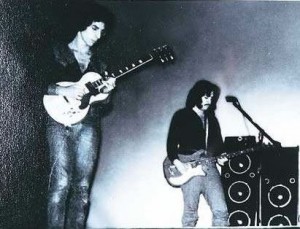
The late 1960s saw hard rock music about to transform out of its formative years when The Beatles and The Rolling Stones had ruled supreme. The heavier guitar and punchier rhythms of The Jimi Hendrix Experience and The Jeff Beck Group was leading into the advent of Led Zeppelin, Deep Purple and Black Sabbath. This exciting time in music was overwhelmingly British in tone, but on the American side of the Atlantic Ocean there were kids with dreams of becoming the American Beatles, or something like that. For such an ambition to be realized, assembling the right team would be essential. But not easy.
“I hated him.”
Paul Stanley on his first impression of Gene Simmons
The meeting that made such a bad impression on the young Stanley Eisen came about because a lot of people in New York were trying to figure out how to form a good band. Eisen and Klein played and hung out with some of the same musicians, the most important link between them being Stephen (or Steve) Coronel, a high school friend of Klein in the 1960s who also became friendly with Eisen.
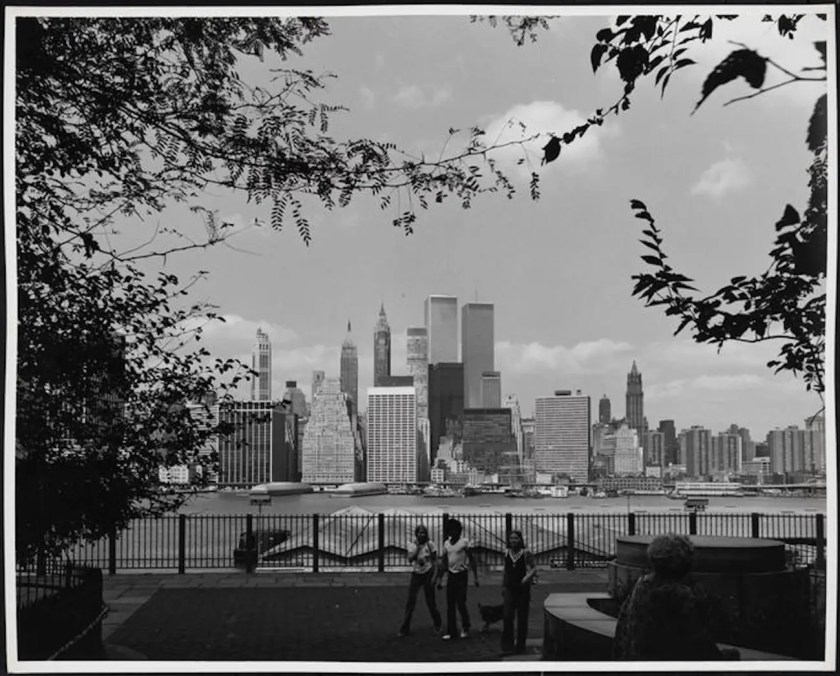
Gene Klein’s biggest idol was Paul McCartney, and so he played bass and sang in early bands that counted The Long Island Sounds, The Love Bag, Cathedral, and Bullfrog Bheer. All of these included Coronel at one point or another. Stanley Eisen was fascinated more by rhythm guitar than lead, and he played and sang in the early bands Incubus, The Post-War Baby Boom, Uncle Joe, and Tree. The latter couple of these is where he crossed paths with Coronel. As the 1960s gave way to the 1970s, the stage was set for a meeting of minds and ambitions that would change the lives of both Klein and Eisen.
1970
The chronology of events is unclear and often contradictory in the numerous official KISS books and documentaries on offer. After all, this very brief time period involved many less-than-promising bands, and there were myriad meetings between people who would understandably have a hard time remembering details years or indeed decades later. Going by the information available (see the essential sources listed at the end of this article), early events of pre-KISStory unfolded something like this:
In January 1970, Gene Klein met keyboardist and music teacher Brooke Ostrander. One version of the story says that the ever-entrepreneurial Klein sometimes rented out his sound equipment to make money, and Ostrander needed it for gigs he was doing with guitarist Larry DiMarzio in a cover band called Gas, Food & Lodging. Ostrander himself, however, claims that DiMarzio knew Klein from school and introduced Ostrander to the songwriter and bass player. While DiMarzio would later find fame as a pioneer of guitar pick-ups, Klein and Ostrander hit it off and decided to form a band together that would play original material instead of covers.
As a kind of preparation for this, they would spend the first few months of 1970 recording primitive demos of Klein’s eclectic catalog of original songs in Ostrander’s small home studio. These early recordings, admittedly not sounding very good, Klein would then doggedly try to shop to record companies. One of the songs, “Leeta”, was included in the KISS release The Box Set in 2001:
This is the seed of Wicked Lester, as Klein and Ostrander went about building a new band on the foundation of their demo recordings.
“For four or five months, Gene and I made these tapes and Gene shopped them around. The labels recommended we come back when we got a band together.”
Brooke Ostrander
According to Stanley in his autobiography, his band Tree needed a bass player and Steve Coronel suggested Gene Klein. At the same time, Klein’s band Bullfrog Bheer wanted Coronel to fill in as lead guitarist for a few gigs. And to add to the confusion, the band that Klein, Ostrander and Coronel wanted to put together also needed a singer and second guitarist.
“I thought of Stan for this new band and said to Gene, ‘What if I hook you up with this guy named Stan?’ I called him and said, ‘Gene and I want to meet with you.’ ”
Steve Coronel
Sometime in August 1970, Coronel facilitated a meeting at his apartment in Washington Heights. Gene Klein had seen Stanley Eisen perform with Tree already, and had been impressed with his performance, but this August day in 1970 seems to be the first time the two of them spoke together. It was to become a classic meeting, making a good story in happy retrospect.
Klein played some of his songs for Eisen, and Eisen was decidedly unimpressed by tunes like “Stanley the Parrot” (not Eisen-related, but a song that would later morph into the KISS classic “Strutter”) and whatever else Klein had cooked up at the time. What Eisen would remember most clearly from the meeting was not Gene’s songs but the fact that he strongly disliked Gene’s ego and attitude.
“He played some songs for us that I thought were sort of goofy. Then he challenged me to play one of my songs, so I played something called ‘Sunday Driver’, which I later retitled ‘Let Me Know’. He seemed completely thrown that someone besides John Lennon, Paul McCartney, and Gene Klein could write a song. […] I was annoyed that he saw himself as operating at a level that qualified him to pass judgment on me – as though all that mattered was his approval.”
Paul Stanley
“I’d never met anyone else who wrote songs. I thought I was the only one on Earth who wrote songs. I was so impressed with the fact that I taught myself how to play guitar and bass and learned how to write songs that I thought it was the first time that any human being had ever done it. […] I liked ‘Sunday Driver’ and was struck by how good the construction and melody was.”
Gene Simmons
This initial strong dislike versus begrudging admiration was the dynamic that sparked the beginning of KISS. The wheels were now in motion, even if Klein and Eisen went their separate ways after this first meeting. Somehow, the gravity between the two would pull them together again very soon.
Not long after, Klein and Ostrander were trying to assemble players for the group they wanted to base on their demo recordings. Ostrander recruited drummer Joe Davidson, while they hoped to find a lead guitarist through an ad in The Village Voice. The only person who answered the ad was Stanley Eisen. He spoke to Ostrander on the phone but was dismissed because he only played rhythm guitar and not leads. Klein instead recruited his old friend Coronel, and the band named themselves Rainbow. Coronel then, ironically and fatefully, suggested they flesh out the line-up with someone who could both sing and play guitar: Stanley Eisen.
1971
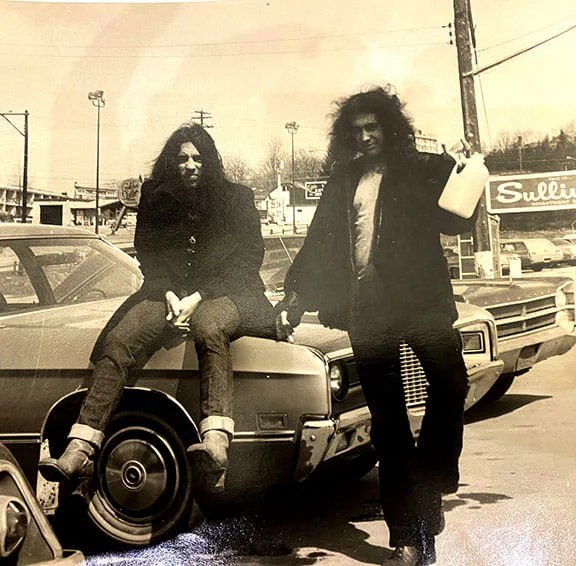
By early 1971, drummer Joe Davidson had been replaced by Tony Zarrella, and Rainbow were rehearsing in a cheap and dingy Chinatown loft. The band’s repertoire consisted of Klein and Eisen originals mixed with some cover material. The originals included Eisen’s “Love Her All I Can” as well as “She” and “Little Lady” (later to be known as “Goin’ Blind”) by Klein and Coronel, songs that would later turn up on KISS records. During this time of creative bonding, Eisen came to realize that working with Klein held the key to success.
“He was smart and serious. […] He had a lot to offer. He could sing well and play bass well. He could write songs. Perhaps most importantly, Gene was focused.”
Paul Stanley
All three of the band’s confirmed concerts were performed in the spring and summer of 1971. Their first gig was at Richmond Community College in Staten Island, after which they dropped their name Rainbow because they learned that someone else might be using it. Selecting the new moniker Wicked Lester (“Yeah, it’s a really unusual name!”, Klein would say with enthusiasm), the band played two sets in one night at the Rivoli Theatre in South Fallsburg on 23 April 1971. In the summer, Wicked Lester played a B’nai B’rith event at a hotel in Atlantic City, New Jersey, and the band might have been feeling that they were gaining some momentum. Only to be brought to a standstill.
Walking into their rehearsal loft one day following the Atlantic City gig, the band were shocked to find the entire floor cleared out. All their equipment was gone, every single bit stolen, except “a stand with a cowbell”, as drummer Zarrella recalls. For Wicked Lester there wouldn’t be more cowbell, but only cowbell. (Note: both Paul Stanley and Brooke Ostrander have in later years placed this incident in the fall of 1972, an example of how KISStory can be uncertain…)
With no gear and no prospects, the story of Wicked Lester nevertheless took a fortunate turn in the latter half of 1971. Producer Ron Johnson at Electric Lady Studios had been badgered by Klein and Eisen to consider their band, and he also had a manager friend named Michael Jeffries who had promised Polydor Records to find three bands for them. Jeffries had only found two and asked Johnson for help. Johnson duly suggested Wicked Lester. Even though Polydor would flatly reject the band, they now had the attention of Ron Johnson and access to a great studio where they could put their music on tape.
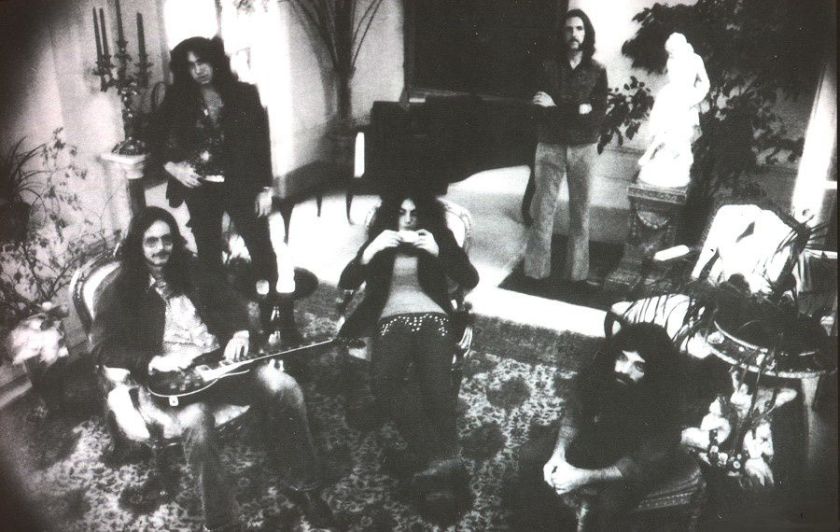
In late 1971 Wicked Lester were recording what was intended to be their debut album, with Ron Johnson at Electric Lady Studios. The band worked on so-called spec time, meaning that they basically waited around until nobody was using the studio. Johnson called them in whenever there was available time, day or night.
For Klein and Eisen, it was a dream come true.
1972
The piece-meal recording of the Wicked Lester album stretched on into 1972. The band worked under the direction of engineer and producer Ron Johnson, which resulted in a confused-sounding selection of songs that ranged in style from hard rock to folk-tinged country pop.
“If a hit song that week featured a wah-wah pedal, we’d put some wah-wah in the song. If somebody had a slide guitar, we’d put on some slide. But we were just happy to be in a studio, making music.”
Paul Stanley
At some point during the process of making the record Ron Johnson reached out to manager Lew Linet, asking him if he would consider managing Wicked Lester. Linet accepted and started his task by working out a simple one-album deal with Epic Records for the release of the Wicked Lester album that was already being produced. Epic agreed to the deal and a cash advance, but according to official KISStory this was only on the condition that the band change their lead guitarist, Coronel. They didn’t like his sound and they didn’t like his look. Now Gene Klein’s old friend Steve Coronel was standing in the way of a record deal.
In very telling remarks in their respective memoirs, Stanley and Simmons outline the thinking that was already present and that would certainly come to ruthless prominence in the long career of KISS:
“It was the first instance when we had to decide whether this was about friendship or about success. We decided to let Steve go. It fell to Gene to tell him.”
Paul Stanley
“He felt betrayed. He wanted to know how I could do that to him, how I could let him be treated that way. It was difficult to explain, but I managed. This was one of my early lessons in the cruel division of the personal and the professional in the music business.”
Gene Simmons
Truth be told, Stanley Eisen did not get along too well with Steve Coronel by that point, and he might have been quite glad for the excuse to kick him out. In fact, Ron Johnson has even claimed deception, saying, “[The] boys had a hard time telling Steve he was fired, so we made it sound like it was the record company who demanded a strong lead guitarist.” If Johnson is right, Eisen at least wanted Coronel out of the band in any case.
Simmons would corroborate this decades later, stating matter-of-factly that, “Paul and my old school chum, Stephen Coronel, weren’t getting along. Paul had a lot of self-confidence, which rubbed Steve the wrong way.” Clearly, these two were not meant to be in a successful band together, and Simmons would not need to think hard about who was to go.
Session guitarist Ron Leejack was brought in as Coronel’s replacement, and Wicked Lester signed their deal with Epic Records. The band was about to finish their record, and things seemed to be going well. Except one problem: Klein and Eisen had started to feel that they didn’t like the album. In fact, they didn’t like their own band.

John Segall would later become known as Jay Jay French, guitarist in the New York band Twisted Sister. In June 1972 he invited Klein and Eisen, who said they were looking for a guitar player, to see his pre-Sister band play in Greenwich Village. Decades later French would recall talking to them after the gig and hearing that they were unhappy with Wicked Lester looking like “a bunch of hippies.” Klein and Eisen wanted to get into glam, into make-up, and into harder rock. To this end the three of them rehearsed together a few times that summer, but without finding it a good match. Clearly, Klein and Eisen had started to feel their way towards a different band, wondering how to improve upon, or how to get out of, the Wicked Lester situation.
In the end it was a moot point. Their record label Epic was under the leadership of Don Ellis, and Don Ellis was mightily unimpressed upon hearing the finished Wicked Lester album. So unimpressed, in fact, that he decided on the spot not to release it. Brooke Ostrander would later state that, “I never understood why Epic never released the record.” And manager Lew Linet would seem shocked in retrospect, saying, “All this after they had paid the advance money and paid for the production!” But ultimately, Ellis’ refusal to release the Wicked Lester album was the act that liberated Klein and Eisen to become Simmons and Stanley and create a new band in their own image.
Wicked Lester was a dead end. To fulfill their ambitions, Klein and Eisen would have to make some drastic changes and leave their first band by the wayside. Of the many strange-sounding tracks on the unreleased Wicked Lester album, the ones that truly point ahead to greater things are “She” and “Love Her All I Can”, songs that would later show up on KISS’ Dressed To Kill album in 1975:
“We were sitting in my living room, and they told me that they were changing their names. Stan looked at me and said that he wanted to be called Paul Stanley, and Gene wanted to be Gene Simmons. […] They said that they wanted to split from the other guys in Wicked Lester and form a real high-powered hard rock band.”
Lew Linet
“Paul and I weren’t happy with the record. […] It was too eclectic. Groups like the Who or the Rolling Stones had a definitive look and sound. Unlike those bands, Wicked Lester lacked a definitive sound and identity. […] I wrote ‘Deuce’ and Paul came up with ‘Firehouse’ and ‘Black Diamond’, and this new material sounded more honed – it had its own personality, distinct from Wicked Lester.”
Gene Simmons
“We basically wanted a better version of Wicked Lester, one that looked visually more like a cohesive unit – a real band. Musically, we wanted to lock into one style of music, not the weird mix of country, jazz, pop and rock that we were doing in Lester.”
Paul Stanley
Manager Linet found them another rehearsal loft in the Flatiron District, which Simmons paid for out of his salary as an assistant to the director of the Puerto Rican Interagency Council, and the determined duo went about auditioning drummers for their new band. They would continue to rehearse with the other members of Wicked Lester, while secretly trying to set up a new band behind their backs. Among the people they connected with in this process was Peter Criscuola, better known to rock history as Peter Criss.
“A few nights a week, we rehearsed with the guys in Lester. But on the other nights – and they never knew this – Paul and I would audition lead guitarists and drummers for the band we really wanted to form.”
Gene Simmons
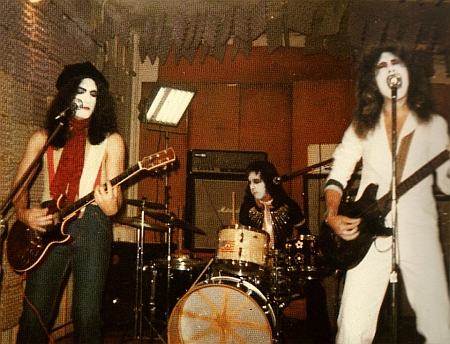
Still calling themselves Wicked Lester, possibly out of some misguided sense that they could get mileage out of the original album deal with Epic, the new trio of Simmons, Stanley and Criss started rehearsing and set up a showcase for Don Ellis and other Epic decision makers in their loft on 20 November 1972. One of the Epic people in attendance was Tom Werman, a young A&R executive later credited for discovering Boston and Cheap Trick among others.
The naïve intention was to “exchange KISS for Wicked Lester,” as Simmons would later put it. Made up in whiteface, as seen above, this remade band powered through a very loud set of soon-to-be KISS classics, but inevitably they made as poor an impression on Ellis as their Wicked Lester album had done earlier in the year.
“The performance was wonderful. It was really good, really loud, and really hard-core compared to [the earlier] Wicked Lester. […] Don didn’t get it, plain and simple, and passed on signing them. […] I didn’t argue with him. I wimped out.”
Tom Werman
The band dusted themselves off and felt oddly confident that this new music and this new sense of direction was the right thing, no matter what Don Ellis at Epic had to say about it. With no prospect of having their album released, Wicked Lester crumbled and fell apart in the fall of 1972, while Simmons and Stanley refocused their energies on the new band.
In December 1972 they placed an ad in The Village Voice for a lead guitarist. When one of the many who answered and auditioned was Paul Frehley, better known to rock history as Ace, the door was truly closed on the first chapter of Simmons’ and Stanley’s lifelong journey.
Wicked Lester was dead. Long live KISS.
Sources: KISStory (1994), KISS and Make-up (Gene Simmons, 2001), KISS Alive Forever (Curt Gooch and Jeff Suhs, 2002), Behind the Mask: The Official Authorized Biography (David Leaf and Ken Sharp, 2003), Nothin’ to Lose: The Making of KISS 1972-1975 (Ken Sharp with Paul Stanley and Gene Simmons), Face the Music: A Life Exposed (Paul Stanley, 2014), kissfaq.com

 STRANGE WAYS